Concrete Septic Tanks Supplied and Installed
Septic Tanks Supplied & Installed
A concrete septic tank is the traditional choice on the Mid North Coast, and for most rural blocks it is still the right one. It is heavy, it stays put in wet ground, and a properly made tank outlasts the house. We supply NSW Health accredited concrete tanks, size them to the home, handle the council approval and install them across the Port Macquarie, Kempsey, Nambucca and Manning areas.

Biocycle Accredited Installer
From Approval to a Tank in the Ground
How It Works
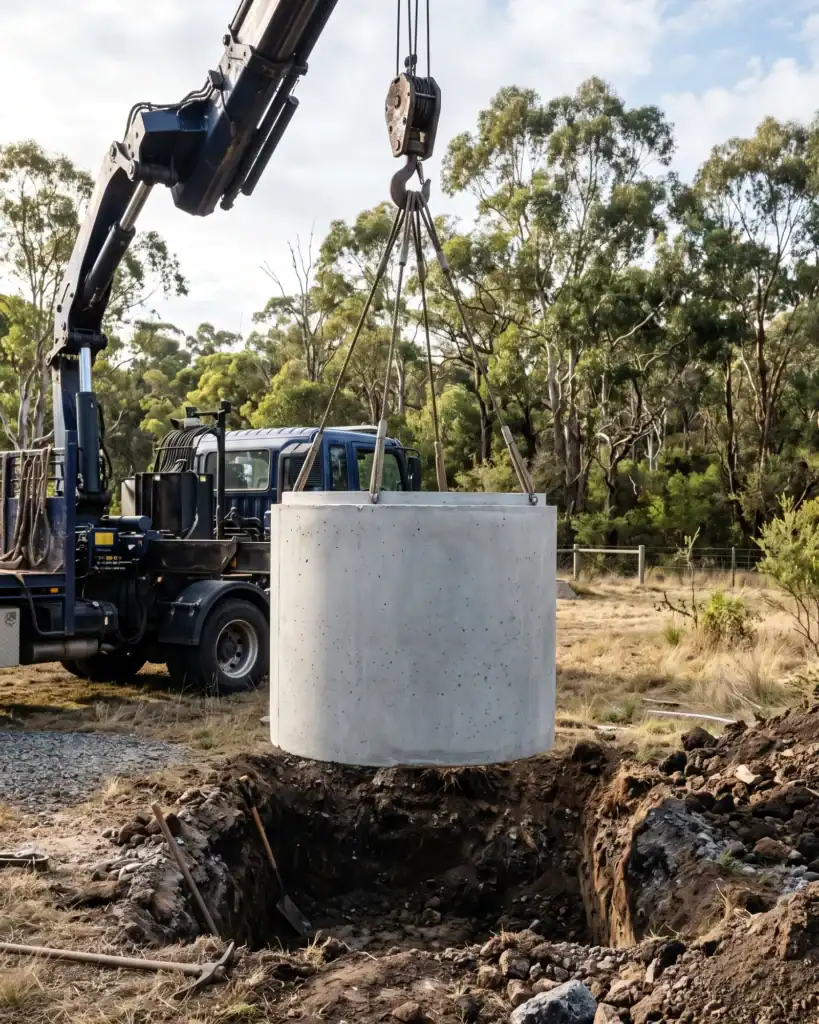
A concrete tank goes in the same way as any other system we install, with a crane truck doing the lifting on delivery day.

Council Approval
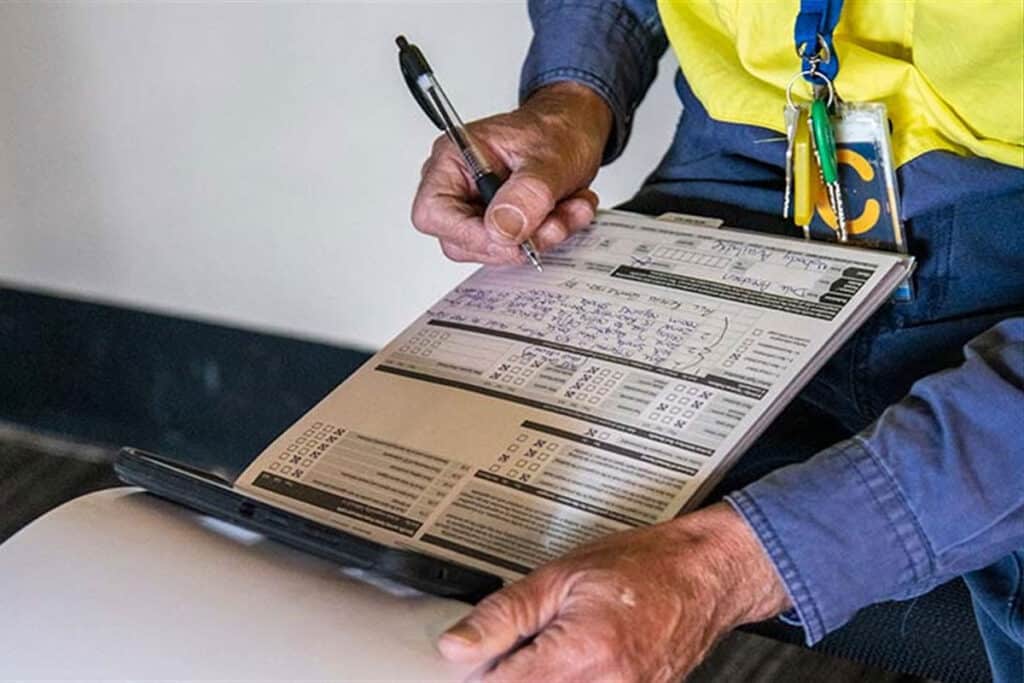
Every new septic system in NSW needs Section 68 approval before work starts. We prepare and lodge the application with your council, arrange the site and soil assessment, and see it through to the approval to operate once the tank is in.
Supply and Delivery
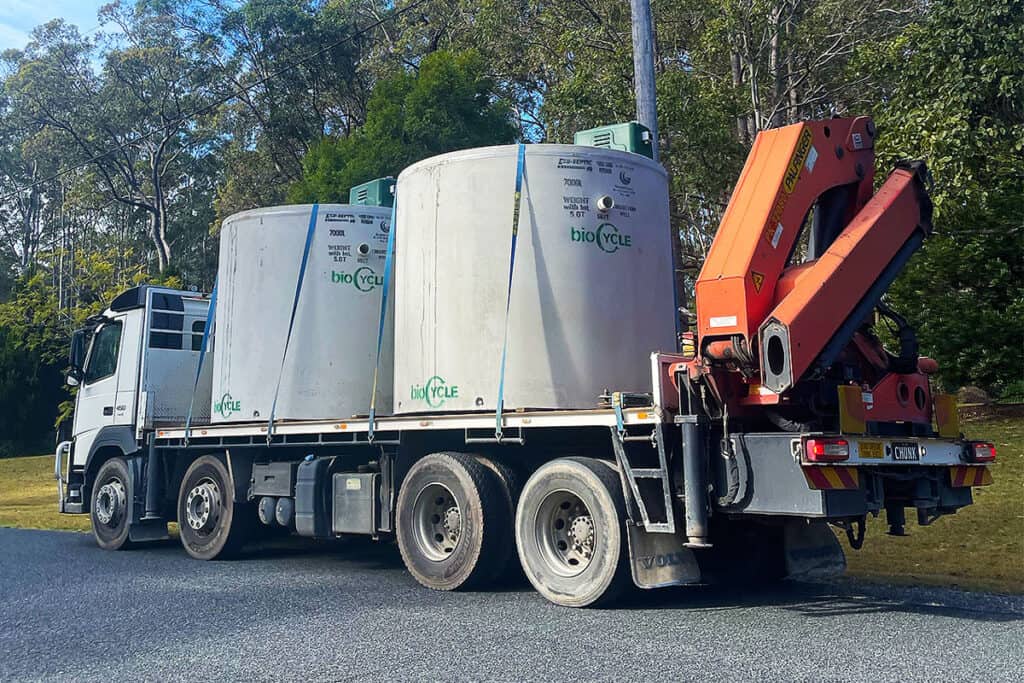
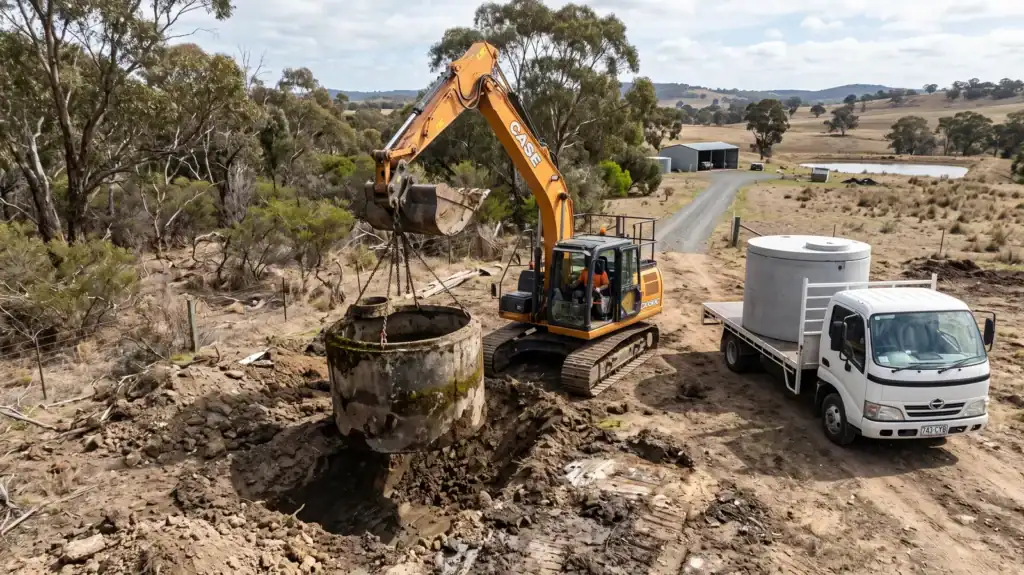
We supply the tank and get it to the block on a crane truck. On acreage we plan the delivery and the excavation together, so the truck and the excavator only need to come once and the tank goes straight from the truck into the hole.
Install and Connect
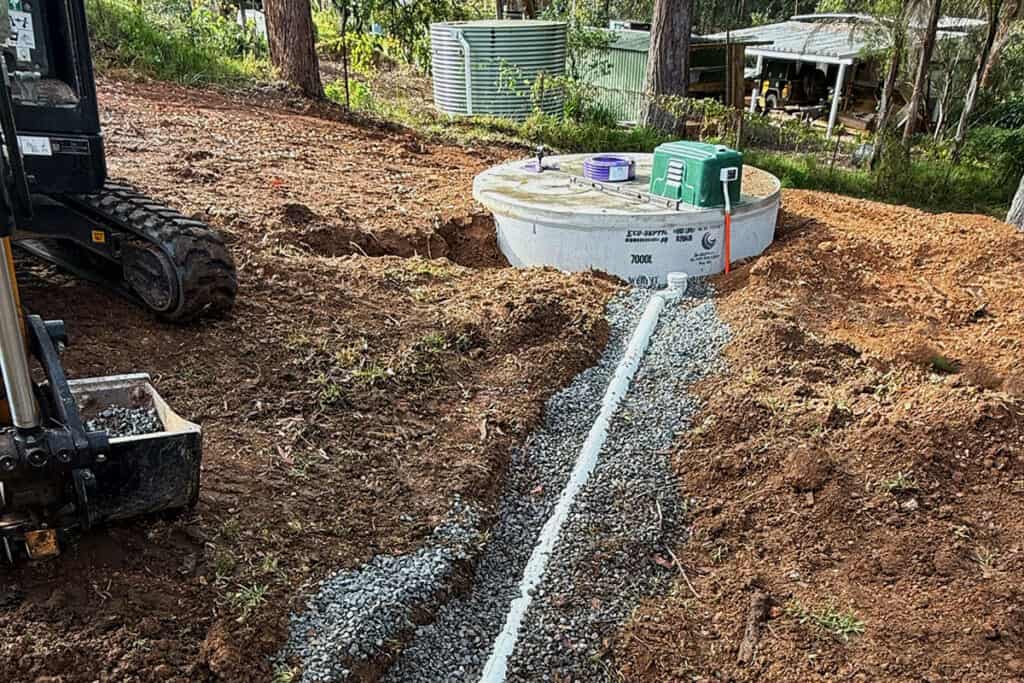
We excavate, set the tank on a level base, connect the house drainage and the outlet, and build the disposal trench or irrigation area to the approved design. Council inspects, and you are handed a working, approved system.
Heavy, Stable and Built to Stay Put
Why Concrete
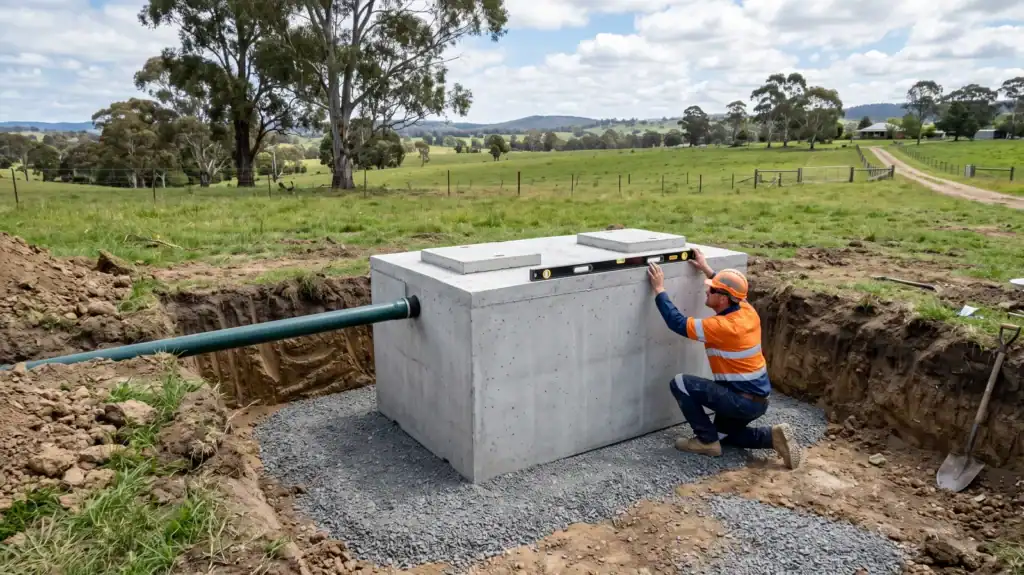
A concrete septic tank does the same job as any other septic tank. It holds the wastewater from the house long enough for solids to settle and start breaking down, then passes the liquid on to a disposal trench. What sets concrete apart is the weight and the way it behaves in the ground.
A typical household tank weighs a couple of tonnes empty. That is a nuisance on delivery day, which is why it arrives on a crane truck, but it is a real advantage once it is in the ground. On the river flats around Taree, Kempsey and Macksville, and on the sandy blocks near the coast, the water table can sit close to the surface for months at a time. A concrete tank does not care. It sits where it was put, full or empty, wet season or dry.
Concrete is also the practical choice where a vehicle might cross the tank, on a driveway or a farm track, because the lid and the tank body carry load in a way a poly tank is not designed to. And a well made concrete tank simply lasts. We regularly see tanks that have been in the ground for forty years and are still sound.
The tanks we supply carry NSW Health accreditation, which is a condition of council approval for any sewage management facility in NSW. We size the tank to the number of bedrooms under the state guidelines, not to a rule of thumb, and the site and soil assessment sets the size of the disposal area to match.
If you are weighing up concrete against poly, our comparison article walks through where each one wins. Either way, the tank is the easy part. The approval, the trench and the installation are where the job is won or lost, and we handle all three.
When a Concrete Tank Is the Right Call
Where It Suits
Concrete is not automatically better than poly. It is better in specific situations, and the block usually makes the decision for you.

High Water Table
On low river flats and estuary blocks where groundwater sits close to the surface, a heavy tank stays put. There is no risk of it lifting when it is pumped out.
Vehicle Access Over the Tank
Where a driveway, farm track or hardstand crosses the tank, concrete carries the load. A poly tank in that spot needs protection or a different location.
Long Term Rural Blocks
On a farm or acreage that will stay in the family, the extra life of a concrete tank pays for itself over the decades it sits in the ground.
Replacing an Old Concrete Tank
When an old tank has finally failed, a new concrete tank usually goes in the same hole with the least disruption to the existing drainage and trench.


"The installation was clean, quick, and professionally done"
Septic Tank Installtion
From the first phone call, Ben made everything so straightforward. He handled the council approval, explained the options clearly, and kept us updated the whole way through. The installation was clean, quick, and professionally done.
As someone building on a rural block for the first time, I really appreciated the honesty and attention to detail. I’d absolutely recommend him to anyone needing a septic system installed.
The whole process was so easy from start to finish. Ben handled the council stuff, kept us informed, and had the system installed quicker than we expected.
We were building a new home off-grid and had no idea what was needed. Ben explained everything clearly and made sure it was all compliant.
We replaced an old tank that kept blocking up. The new system has been running perfectly since day one, and we wish we had done it sooner.
Concrete Tank Installs Across the Region
Where We Work
We supply and install concrete septic tanks across the Mid North Coast and Manning Valley, from Port Macquarie and the Hastings valley through the Camden Haven, Macleay and Nambucca, down to Taree, Forster and the Manning.
Servicing Areas Including
Concrete Septic Tanks Old Bar
Concrete Septic Tanks Forster
Concrete Septic Tanks Wingham
Concrete Septic Tanks Port Macquarie
Concrete Septic Tanks Tuncurry
Concrete Septic Tanks Wauchope
Concrete Septic Tanks Kew
Concrete Septic Tanks Kempsey
Concrete Septic Tanks Harrington
Concrete Septic Tanks Taree
One Contact from Tank to Approval
Why Us
You are not buying a tank from one place, an installer from another and chasing council yourself. It is one job, and we run it.
Sized Under the NSW Rules
Bedroom count and the state guidelines set the tank size, so council does not send the application back.
Approvals Handled
We prepare and lodge the Section 68 application and see it through to the approval to operate.
Crane Truck Delivery
The tank comes on our schedule, straight off the truck and into the excavation, no second trip.
Trench Built to the Design
The disposal area is where most systems fail. Ours is built to what the soil assessment says the block can take.


0+
Systems Installed
Fully approved and professionally installed systems across the region.
0%
Council Approval Rate
We handle all paperwork and get it right, first time, every time.
0+
Years of Local Experience
Helping homeowners and builders with compliant wastewater systems.
Common Questions About Concrete Septic Tanks
Frequently Asked Questions
The questions we get asked most before a concrete tank goes in.
How long does a concrete septic tank last?
Decades. A well made concrete tank that is pumped out on schedule and not overloaded will commonly stay in service for forty years or more. The parts that usually fail first are the lid and the outlet baffle, both of which can be repaired without replacing the tank.
Is concrete better than poly for a septic tank?
It depends on the block. Concrete wins where the water table is high, where a vehicle might cross the tank, or where you want the longest possible life. Poly wins where access is tight and a crane truck cannot get in. We recommend whichever suits the site, and the soil assessment usually settles it.
Can a concrete septic tank crack?
Over a very long time the gases inside a tank can slowly attack the concrete above the water line, and a poorly made or badly installed tank can crack. That is why we only supply accredited tanks and set them on a properly prepared base. Cracks in a lid are far more common than cracks in the tank itself, and lids are a straightforward replacement.
Do I need council approval for a new concrete tank?
Yes. Installing or replacing any septic system in NSW needs approval under Section 68 of the Local Government Act before work starts, and council issues an approval to operate once it is in. We prepare and lodge all of it as part of the job.
What size concrete tank do I need?
NSW sizes tanks by the number of bedrooms, from 1,650 litres for a one bedroom home up to 4,400 litres for six bedrooms. Any room with a door and a window can count as a bedroom, so a three bedroom house with a study is sized as four. We work it out under the state guidelines before we quote.
Talk to Us About a Concrete Tank
Contact Us
Tell us about the block and the house going on it, and we will work out the right tank and what the approval needs.
Location
Hours
Biocycle Accredited Installer