Poly Septic Tanks Supplied and Installed
Septic Tanks Supplied & Installed
A poly septic tank is the answer when the block is hard to get to. It weighs a fraction of a concrete tank, arrives on a trailer rather than a crane truck, and goes into places a heavy tank cannot. We supply NSW Health accredited poly tanks, size them to the home, handle the council approval and install them properly, which with poly means getting the backfill right.

Biocycle Accredited Installer
From Approval to a Tank in the Ground
How It Works
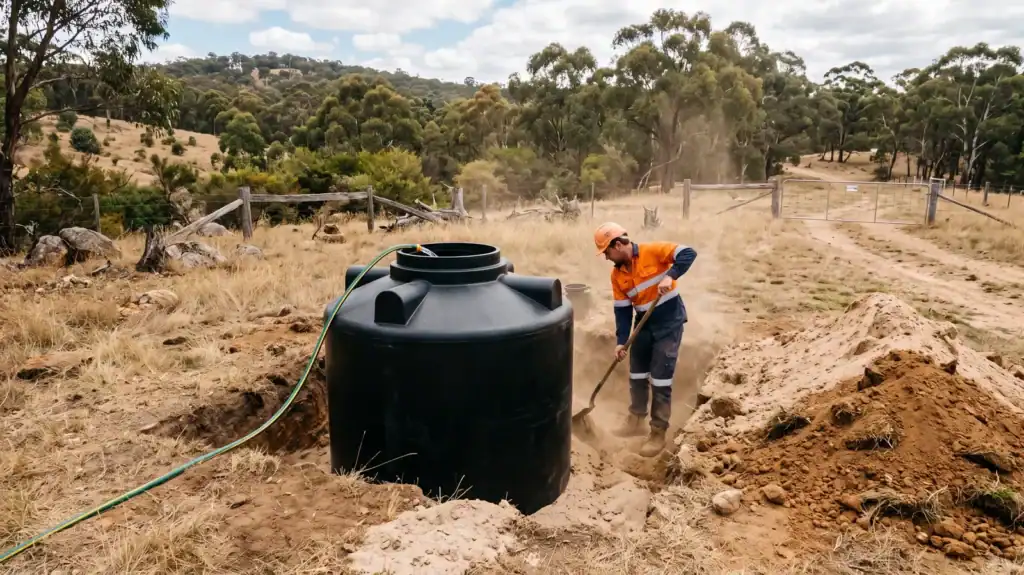
A poly tank goes in the same way as any other system we install. The difference is in the delivery and in how carefully it is bedded and backfilled.

Council Approval
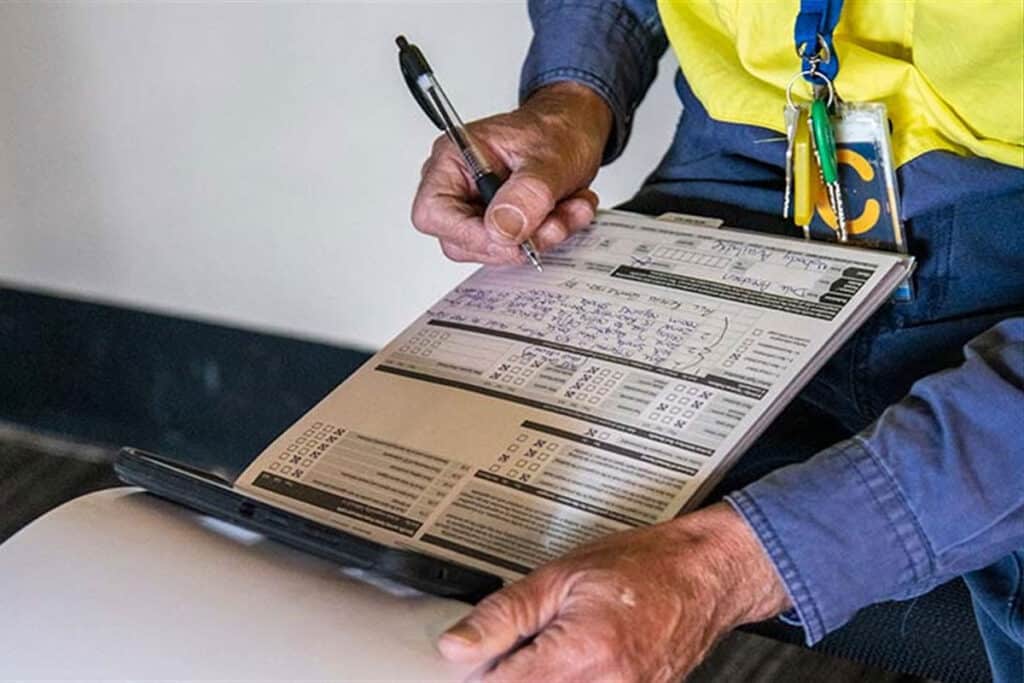
Every new septic system in NSW needs Section 68 approval before work starts. We prepare and lodge the application with your council, arrange the site and soil assessment, and see it through to the approval to operate once the tank is in.
Supply and Delivery
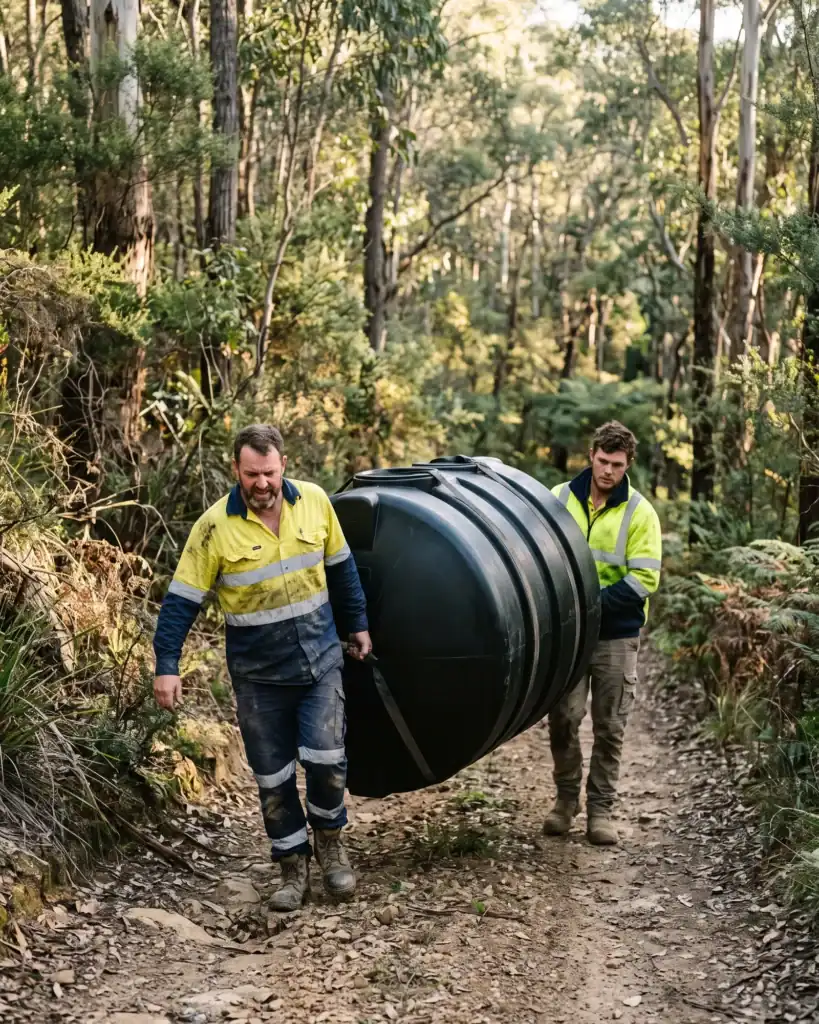
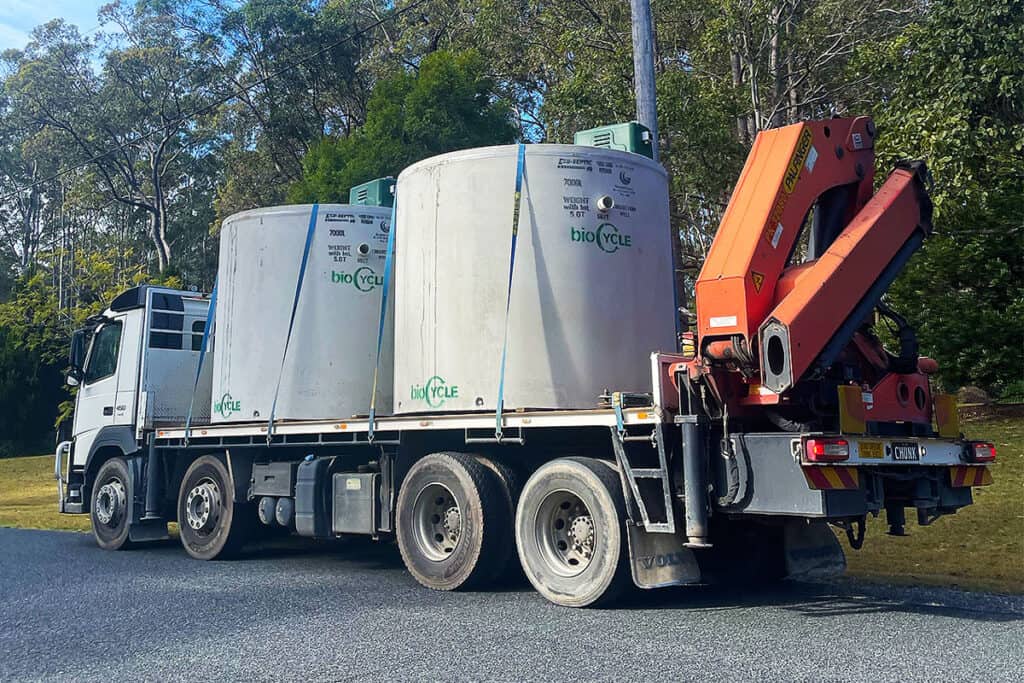
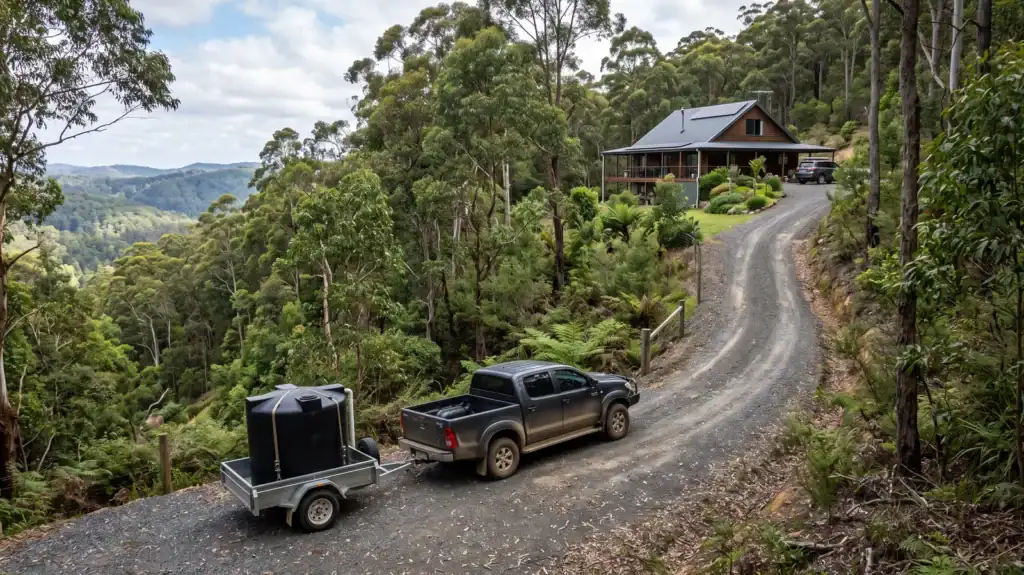
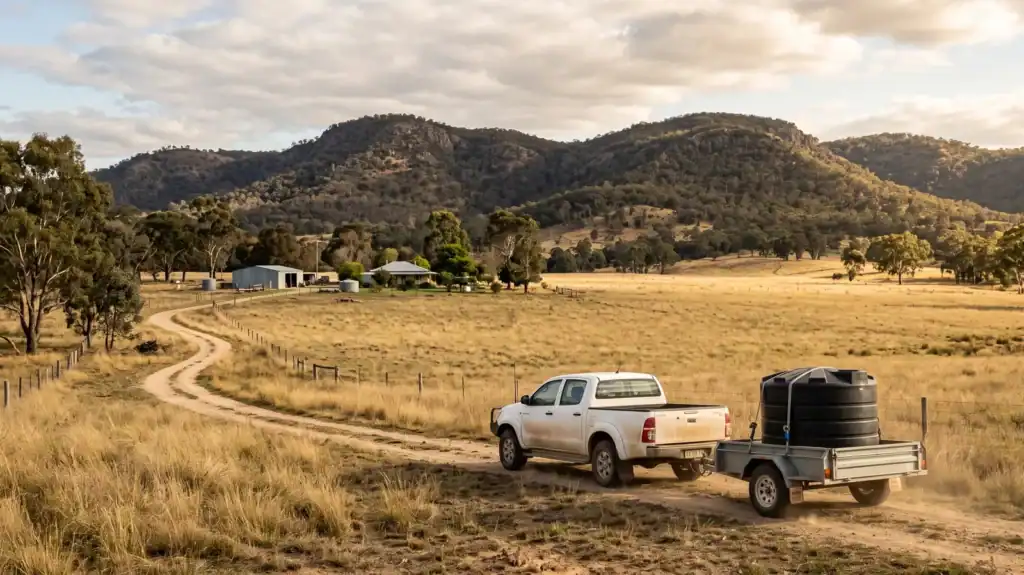
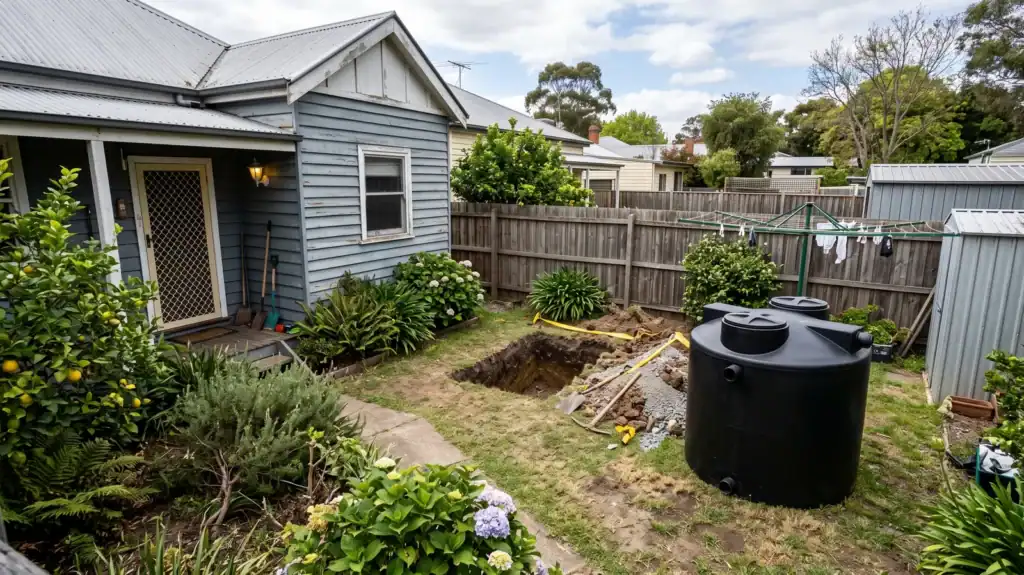
We supply the tank and bring it to the block. A poly tank does not need a crane, so it can go down a narrow driveway, through a gate or across ground a heavy truck would sink into.
Install and Backfill
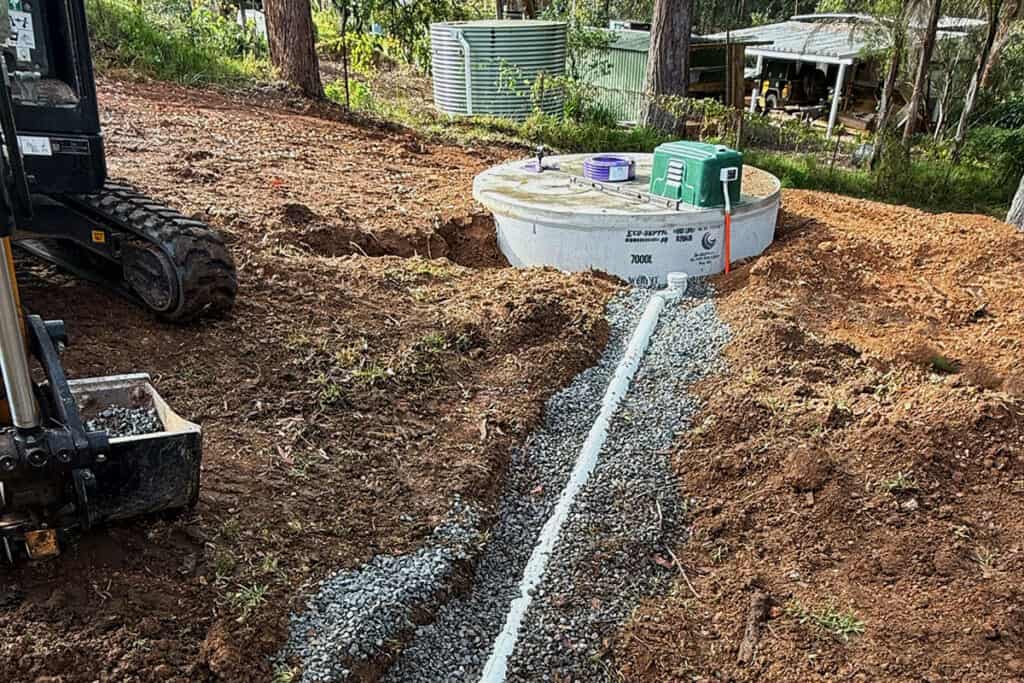
We excavate, bed the tank on a prepared base, fill it with water as we backfill so the walls stay true, connect the drainage and build the disposal area to the approved design. Council inspects and issues the approval to operate.
Light to Deliver, Right When It Is Installed Properly
Why Poly
A poly septic tank is moulded from polyethylene in one piece. It does exactly the same job as a concrete tank, holding wastewater long enough for solids to settle and passing the liquid on to the disposal area, and it is accredited to the same standard. The difference is weight. A household poly tank can be moved by two people, so it arrives on a trailer and goes where a crane truck cannot.
That matters more often than you would think around here. Steep driveways up the Hastings and Camden Haven valleys, soft ground on the Manning and Macleay flats after rain, tight access behind an existing house, or a block a long way from a formed road. On those sites a poly tank is the practical choice, and sometimes the only one.
Poly does not corrode, does not react with the gases inside the tank, and will not crack from ground movement the way a rigid tank can. The trade is that it relies on the ground around it for strength. A poly tank has to be bedded on a proper base and backfilled evenly while it is filled with water, so the walls are supported and stay true. Done properly, it lasts for decades. Done badly, it can distort or lift.
The other thing to know is the water table. An empty poly tank in wet ground wants to float, so on low blocks we anchor it or specify a concrete tank instead. The site and soil assessment tells us which. And a poly tank should not have vehicles driven over it unless it is rated for that and installed to suit.
The tanks we supply carry NSW Health accreditation, which council requires before it will approve a system. We size them to the bedroom count under the state guidelines and match the disposal area to what the soil can take.
When a Poly Tank Is the Right Call
Where It Suits
Poly is not automatically the cheaper or easier option. It is the better option in specific situations, and access is usually the one that decides it.

Tight or Steep Access
Where a crane truck cannot reach the excavation, a poly tank still can. Narrow driveways, gates, soft ground and long tracks are all poly territory.
Remote Rural Blocks
On blocks a long way from a sealed road, a tank on a trailer behind a ute is simpler and cheaper to get there than a heavy vehicle.
Well Drained Ground
On sloping, well drained blocks where the water table stays low, poly is a straightforward, long lasting choice.
Replacing a Tank Behind a House
When an old tank sits behind an existing home with no room for a crane, a poly tank can usually be carried in and installed in the same spot.
"The installation was clean, quick, and professionally done"
Septic Tank Installtion
From the first phone call, Ben made everything so straightforward. He handled the council approval, explained the options clearly, and kept us updated the whole way through. The installation was clean, quick, and professionally done.
As someone building on a rural block for the first time, I really appreciated the honesty and attention to detail. I’d absolutely recommend him to anyone needing a septic system installed.
The whole process was so easy from start to finish. Ben handled the council stuff, kept us informed, and had the system installed quicker than we expected.
We were building a new home off-grid and had no idea what was needed. Ben explained everything clearly and made sure it was all compliant.
We replaced an old tank that kept blocking up. The new system has been running perfectly since day one, and we wish we had done it sooner.
Poly Tank Installs Across the Region
Where We Work
We supply and install poly septic tanks across the Mid North Coast and Manning Valley, from Port Macquarie and the Hastings valley through the Camden Haven, Macleay and Nambucca, down to Taree, Forster and the Manning.
Servicing Areas Including
Poly Septic Tanks Old Bar
Poly Septic Tanks Forster
Poly Septic Tanks Wingham
Poly Septic Tanks Port Macquarie
Poly Septic Tanks Tuncurry
Poly Septic Tanks Wauchope
Poly Septic Tanks Kew
Poly Septic Tanks Kempsey
Poly Septic Tanks Harrington
Poly Septic Tanks Taree
Installed the Way Poly Needs to Be
Why Us
Most problems with poly tanks come from the installation, not the tank. That is the part we are careful with.
Bedded and Backfilled Properly
Filled with water as it is backfilled, on a prepared base, so the walls stay supported and true.
Anchored Where It Needs to Be
On wet blocks we anchor the tank or recommend concrete instead, so it never lifts when it is pumped out.
Approvals Handled
We prepare and lodge the Section 68 application and see it through to the approval to operate.
Sized Under the NSW Rules
Bedroom count and the state guidelines set the tank size, so council does not send the application back.


0+
Systems Installed
Fully approved and professionally installed systems across the region.
0%
Council Approval Rate
We handle all paperwork and get it right, first time, every time.
0+
Years of Local Experience
Helping homeowners and builders with compliant wastewater systems.
Common Questions About Poly Septic Tanks
Frequently Asked Questions
The questions we get asked most before a poly tank goes in.
Is a poly septic tank as good as concrete?
For holding and treating wastewater, yes. Both are accredited to the same standard and do the same job. Concrete is heavier and better where the water table is high or a vehicle crosses the tank. Poly is lighter and better where access is difficult. The block decides which is right.
Can a poly septic tank float?
An empty poly tank in wet ground can lift, which is why installation matters. We bed it on a prepared base, fill it with water as we backfill, and anchor it on low blocks where groundwater sits high. On the wettest sites we will recommend a concrete tank instead.
How long does a poly septic tank last?
Decades, when it is installed properly and pumped out on schedule. Polyethylene does not corrode or react with the gases inside a tank, so the tank itself is rarely the part that fails. The disposal trench and the outlet baffle usually need attention long before the tank does.
Can I drive over a poly septic tank?
Not unless it is rated for it and installed to suit. A standard poly tank relies on the ground around it for strength, and vehicle loads can distort it. If a driveway or track has to cross the tank, we will either move the tank or specify concrete.
Do I need council approval for a poly tank?
Yes. Installing or replacing any septic system in NSW needs approval under Section 68 of the Local Government Act before work starts, and council issues an approval to operate once it is in. We prepare and lodge all of it as part of the job.
Talk to Us About a Poly Tank
Contact Us
Tell us about the block, the access and the house going on it, and we will work out whether poly is the right call.
Location
Hours
Biocycle Accredited Installer