Installing, replacing or altering a septic system anywhere in the MidCoast Council area needs approval under Section 68 of the Local Government Act before work starts, and a second approval to operate once it is in.
That applies to every property in the MidCoast area, which runs from Harrington and Coopernook on the lower Manning through Taree and Wingham, out to Gloucester, and south along the coast through Old Bar, Hallidays Point, Forster and Tuncurry to Nabiac and Bulahdelah, whether it is a new house on acreage, a replacement for a failed tank or a granny flat going onto an existing system. This guide walks through what MidCoast asks for, how the application is lodged, what happens after it is approved, and the things that most often hold an application up.
We prepare and lodge Section 68 applications with MidCoast as part of every system we install. If you would rather not work through it yourself, the septic tank installation page explains how the whole job runs.
Why council approval is required
A septic tank or aerated system is a sewage management facility under the Local Government Act 1993. Section 68 of that Act lists the activities that need council approval, and installing, constructing or altering a waste treatment device is one of them. Operating a system of sewage management is another. The detail sits in the Local Government (General) Regulation and in the NSW Onsite Wastewater Management Guidelines published by the Office of Local Government, which every council in the state works from.
The reason is straightforward. A poorly designed or badly sited system contaminates groundwater, creeks and neighbouring bores, and once the effluent is in the ground there is no getting it back. Council approval is the check that the system suits the block before it is buried.
The two approvals MidCoast issues
| Approval | When | What it covers |
|---|---|---|
| Approval to install, construct or alter | Before any work starts | The system, its size and type, where it sits on the block and how the effluent will be disposed of |
| Approval to operate | After installation and inspection | Permission to run the system, with conditions on servicing, pump outs and inspections |
MidCoast issues an approval to operate for every system once it has been installed and inspected. It sets out the performance standards the system has to meet and the owner’s responsibilities, and MidCoast renews it automatically every three years in electronic form. A property on septic that changes hands is expected to have a current one.
How to lodge a Section 68 application with MidCoast
MidCoast takes Section 68 applications through its own online portal. You create an account, go to the Apply section, choose Lodge an application and select Permits and Licences, then work through the form and attach the supporting documents. Council assesses it from there and communicates through the portal and by email.
MidCoast manages roughly 13,000 on-site systems, so it has a well worn process and a clear view of what it wants to see. On larger rural lots council can ask for a wastewater report prepared by a suitably qualified professional to identify the most suitable system for the block, over and above the standard site and soil assessment. If the septic system is part of a development application for a new house, the Section 68 approval is usually lodged alongside it.
What the application needs
The application is only as good as what goes in with it. MidCoast will not assess an incomplete application, and the most common reason for delay is a missing document rather than a problem with the system itself. At a minimum you will need:
- A site plan showing the house, the tank, the disposal area, boundaries, driveways, dams, creeks and any bores
- A site and soil assessment prepared by a suitably qualified person, or a full wastewater report on larger rural lots where council asks for one
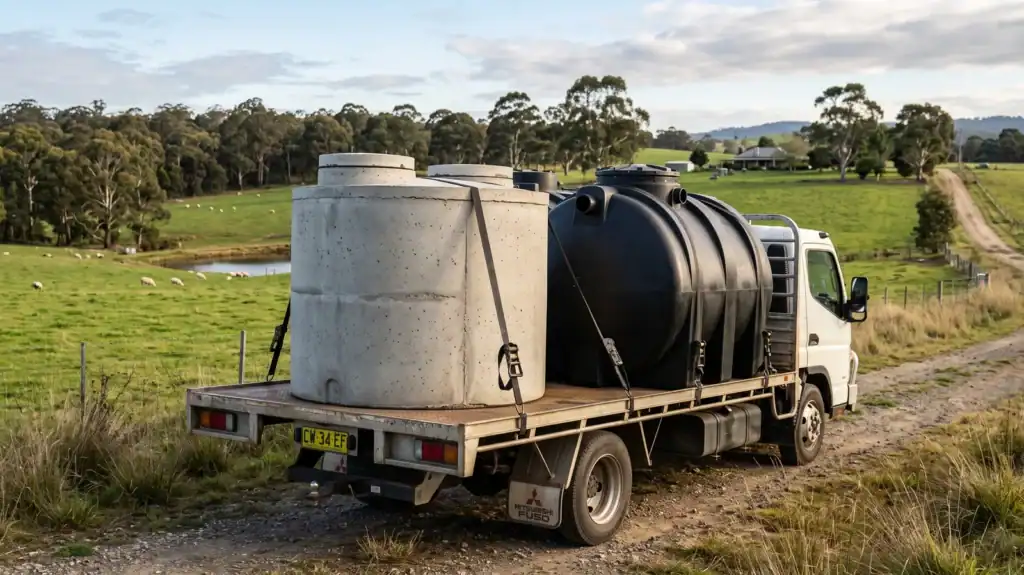
- The specification and NSW Health accreditation certificate for the tank or aerated unit
- The design of the disposal trench or irrigation area, sized from the soil assessment
- Details of who will install the system and how it will be operated and maintained
- The owner’s consent, signed by every owner of the land
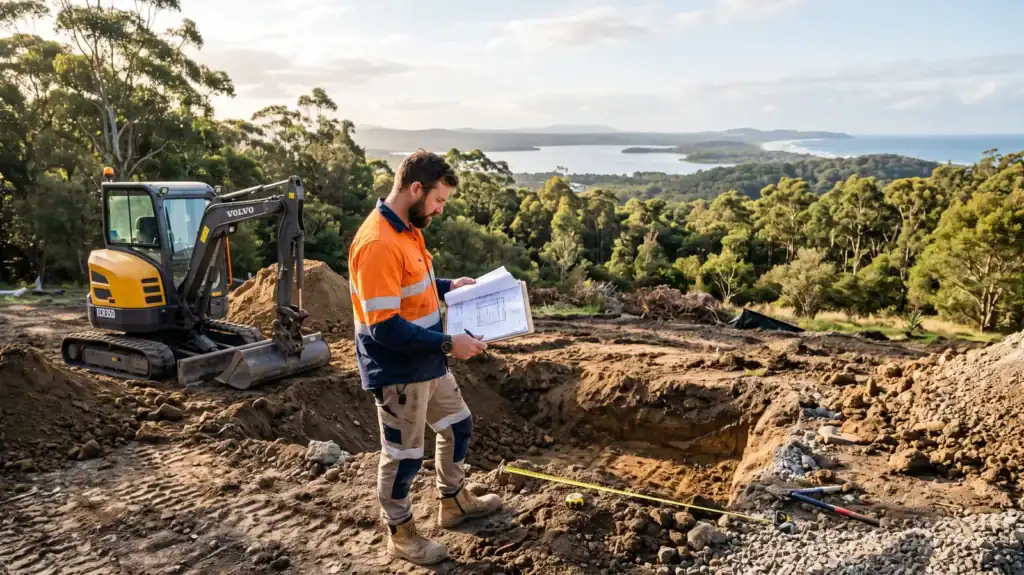
The site and soil assessment is the document that does the heavy lifting. It records the soil type, how quickly it drains, how deep the water table sits, the slope of the block and the setbacks to boundaries, buildings, dams and watercourses. From that the assessor sets the size of the disposal area and, in some cases, decides that a conventional trench will not work and an aerated wastewater treatment system is needed instead.
Inspections and the approval to operate
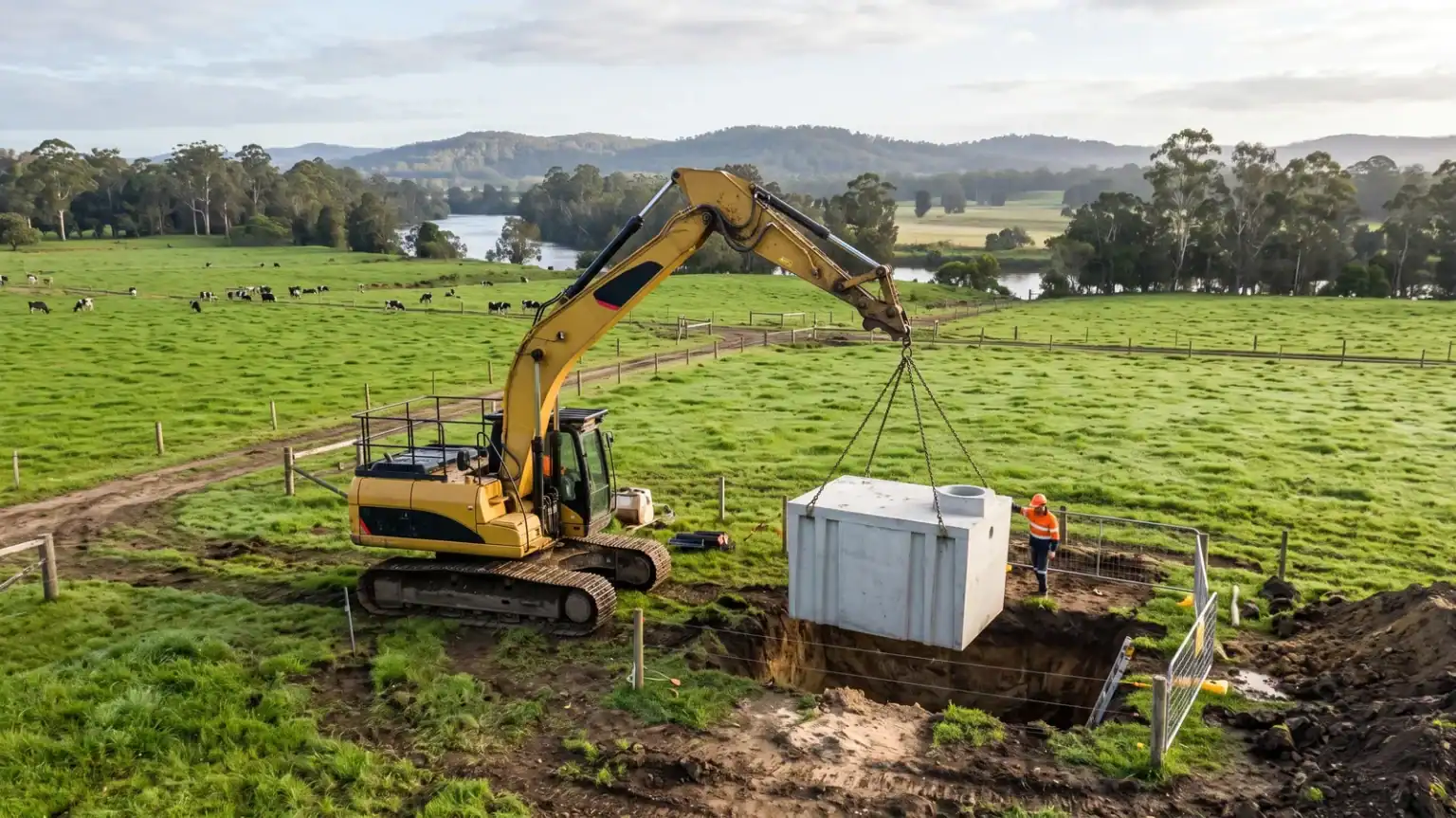
MidCoast’s environmental health officers and building surveyors inspect the system at various stages of the installation to confirm the work meets industry standards, which in practice means before the tank and drainage are backfilled and again when the disposal area is complete. The installer books the inspections and nothing gets covered until council has seen it. Once council is satisfied the work matches the approved design, the approval to operate is issued.
The approval to operate carries conditions. For a conventional septic tank that usually means pumping the tank out on a regular cycle and keeping the disposal area clear of traffic, structures and deep rooted plants. For an aerated system it means a quarterly service by an accredited technician, which is a NSW Health requirement, and the service contract has to be in place before the approval is issued.
Servicing rules MidCoast enforces
MidCoast is specific about maintenance. Aerated wastewater treatment systems must be serviced every three months, or as otherwise approved, by an accredited service agent. That is a NSW Health requirement and a condition of the approval to operate, and council checks the service contract is in place. Treatment tanks of any type should be desludged every three to five years depending on use, and council expects owners to keep to it.
Sensitive ground across the MidCoast
The lower Manning around Taree, Cundletown, Coopernook and Harrington floods, and the water table sits high for much of the year. Wallis Lake and the Myall Lakes are sensitive catchments with firm setbacks to the water. On any of that ground a conventional trench often will not pass the assessment, and council will look for an aerated system with irrigation instead.
On the rising country toward Wingham, Gloucester, Nabiac and Krambach a conventional concrete or poly tank with a trench is more often fine, though shallow soil over rock can limit where the trench goes. Our Taree, Forster and Tuncurry pages cover what we typically see in each part of the area.
What holds applications up
- A tank that is not NSW Health accredited, or that is undersized for the number of bedrooms under the state guidelines
- No site and soil assessment, or one that does not address the setbacks council needs to see
- A disposal area drawn where it cannot go, over a boundary setback, a dam buffer or a flood line
- A room with a door and a window that council counts as a bedroom, which pushes the house up a size band
- Missing owner consent, or an application lodged by a builder without the owner signing it
Most of these are avoidable if the application is prepared by someone who has lodged with MidCoast before. It is the part of the job we do for every system, and it is usually the difference between an approval in weeks and one that drags on.
Frequently asked questions
Do I need council approval for a septic tank in the MidCoast area?
Yes. Installing, replacing or altering any septic system in the MidCoast Council area needs approval under Section 68 of the Local Government Act before work starts, followed by an approval to operate once it is installed and inspected.
How do I apply for septic approval with MidCoast Council?
Through MidCoast’s online portal. Create an account, choose Lodge an application under Apply, select Permits and Licences, and attach the site plan, soil assessment, tank accreditation and owner consent.
How often is the MidCoast approval to operate renewed?
Every three years, automatically and electronically. The approval sets out the performance standards and the owner’s responsibilities, and it travels with the property.
Does MidCoast require a wastewater report?
On larger rural lots council can ask for a full wastewater report from a suitably qualified professional, in addition to the usual site and soil assessment. We arrange it when it is required.
How often does an aerated system need servicing in the MidCoast area?
Every three months by an accredited service agent, or as otherwise approved by council. It is a NSW Health requirement and a condition of the approval to operate.
Getting it approved
Start with the site and soil assessment, because everything else follows from it. Then make sure the tank is accredited and sized to the bedrooms, the disposal area sits where the setbacks allow, and the owner has signed. Lodge with MidCoast, wait for the approval to install, build it to the approved design, and book the inspection so the approval to operate can be issued.
We do all of that as part of installing a system, across the MidCoast Council area and the rest of the Mid North Coast. If you have a block and a plan, get in touch and we will tell you what the approval will need. For the council’s own information, see MidCoast Council’s on-site wastewater page.